
Commercial Irrigation Management
Our Process for Stress-Free Irrigation Systems
Irrigation seems simple on the surface: turn the system on in spring, turn it off in fall, adjust the timer when it gets hot. There’s more to irrigation than that.
A well-managed irrigation system delivers water efficiently, responds to seasonal changes, catches problems before they become expensive, and works in concert with your turf program to keep your property healthy. A neglected system wastes water, overruns flower beds, misses dry spots, and keeps running even when it rains.
Understanding Your Irrigation System
Every property is different. We work with irrigation systems ranging from small four-zone residential-style controllers to massive campus systems with pump houses, 10-inch mainlines, and hundreds of zones across hundreds of acres. While complexity varies enormously, the principles are the same: we need to understand what you have, keep it running efficiently, and catch problems early.
When we take on an irrigation management account, we start by identifying the fundamentals of your system:
- Is there more than one controller? Larger properties often have multiple systems that need to work together.
- Do you have certain water windows? Are there certain time frames in which the system completes its run cycle?
- Are there flow rate limitations? Are there special considerations arising from under-sized meters or wells?
- How many zones do you have? Zone count determines watering complexity and flexibility.
- What brand is your controller? This matters for how we manage it and what upgrades make sense.
- Do you have a backflow preventer? Required to prevent contaminated water from running back into the city water line, and needs inspections throughout the year.
Understanding your system’s starting point lets us build the right management approach for your property.
Our Plan for Managing Your Irrigation System
Startup (Spring)
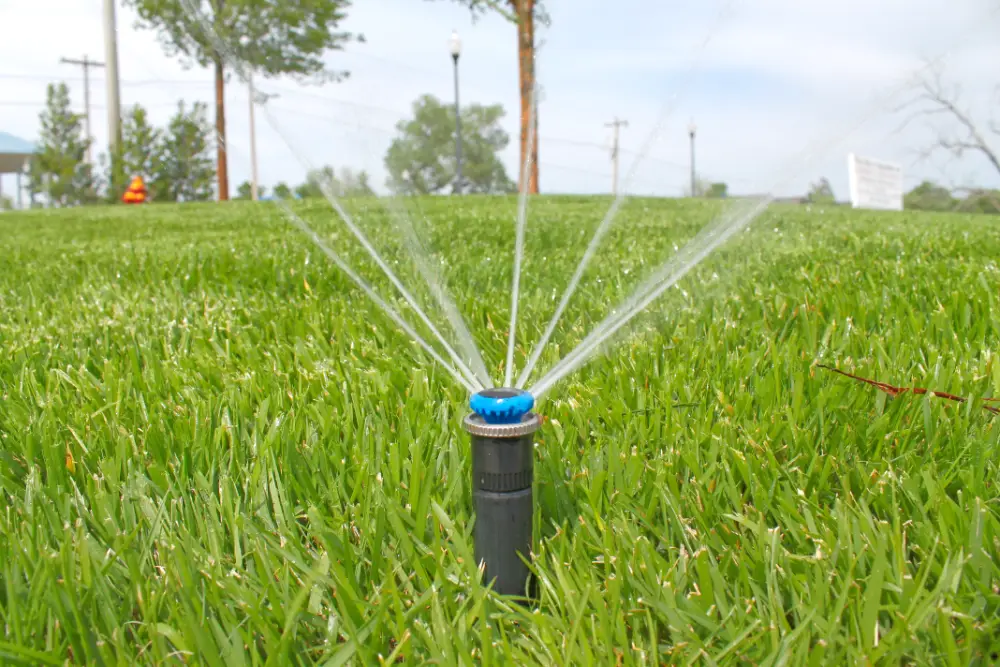
We check every zone and every head. We’re looking for spray pattern issues, clogged nozzles, heads that are positioned incorrectly (too high, too low), and pressure problems that indicate bigger issues. We evaluate system layout and efficiency and whether the heads are positioned to water your property without wasting water or overwatering certain areas.
This is also when we identify leaks. A head that’s dripping when the system’s off, a line that’s running at low pressure, soil that’s always wet in one spot — these are problems that cost you money all season if we don’t catch them now.
At startup, we’ll also give you initial timer settings based on season and forecast. But those aren’t permanent. More on that below.
Winterization (Fall)
Before the system shuts down for winter, we drain it. Any water left in the lines can freeze and crack pipes, which turns into an expensive problem in spring. We blow out the system, close valves, and make sure everything’s prepped for dormancy.
Irrigation Management (Year-Round)
Irrigation Management isn’t set-it-and-forget-it. As temperatures change throughout the year, water needs change. Your system might run 15 minutes once a week in April, but by July it needs 30 minutes once a day.
Our account managers monitor your property and adjust your system’s run times and frequency based on season, weather patterns, and how your landscape is responding. If we see stress in the turf, we increase watering. If we see overwatering (soggy spots, fungal issues), we address it. The goal is efficient water use that keeps your property healthy without waste.
Recommended Irrigation Upgrades: Investing In Smart Systems
Standard irrigation management works, but adding smart technology makes it significantly more effective. These upgrades pay for themselves through water savings and early problem detection.
Cloud-Managed Irrigation Controllers
Systems managed through cloud software (we primarily work with Hunter and Rain Bird) let us make adjustments from anywhere, instantly. Cloud-managed irrigation controllers help with:
- Weather responsiveness: If a rainstorm is forecasted, we can immediately reduce or pause watering across your property without waiting to visit on-site. That’s water savings and prevents the embarrassment of irrigation running during rain.
- Granular control: We can adjust individual zones without adjusting the whole system, optimizing for the specific microclimates on your property.
- Real-time visibility: We can see exactly what’s running, when, and for how long. That visibility catches problems faster.
Rain and Freeze Sensors
Simple devices that go on your roof or landscape. If it rains, the sensor detects moisture and shuts the system off automatically. If temperatures drop to freezing, it prevents sprinklers from running (which wastes water and can damage turf). These work whether your system is cloud-managed or conventional, and they prevent basic waste automatically.
Flow Sensors
A sensor in your mainline measures how much water is flowing through your system. This tells us:
- When there’s a leak: More water is flowing than should be.
- When a head is clogged: Less water is flowing than expected.
Early detection means we catch problems during spring startup instead of discovering them three months later when you’re paying for a leak nobody noticed.
What to Expect from Your Irrigation Team
Most irrigation management is reactive: the system runs on the settings someone programmed months ago, and if something breaks, you call someone to fix it. That’s not our approach.
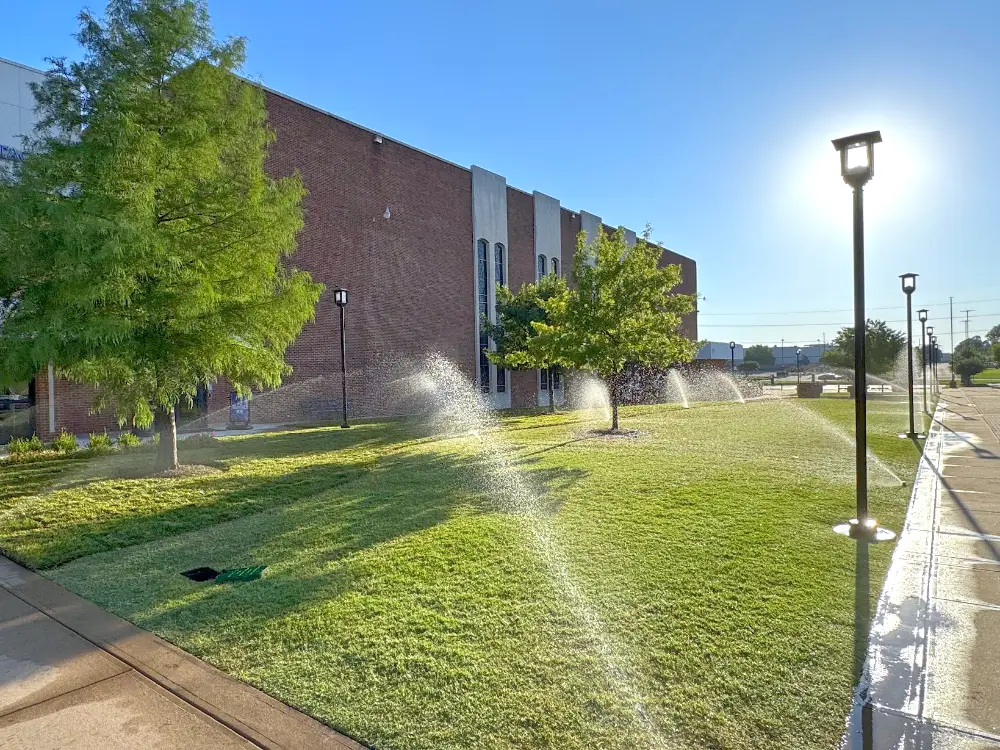
Your property is assigned to an account manager whose job includes making sure your landscape looks good. That includes your irrigation. They’re on-site regularly for mowing, turf care, and landscaping work. They’re watching your irrigation as part of that broader inspection to make sure heads are misting in the right directions, flower beds are happy, and turf hydrated.
That account manager also makes adjustments as the season changes. When it’s 95 degrees in July and your grass needs more water, we adjust. When cool weather comes in September and water needs drop, we dial back, so you don’t have to worry about a thing.
Ready to Optimize Your Irrigation?
If you’re managing irrigation on your own or with a system that only responds when something breaks, there’s a better way. Request a quote, and we’ll assess your current system and show you how active management could improve your water efficiency and landscape health.
Have a specific irrigation question in mind? Reach out and ask. We’re here to help your property use water well, every season.
Request a Quote